

When a Child Hurts Someone — Where Does Our Responsibility Begin and End?
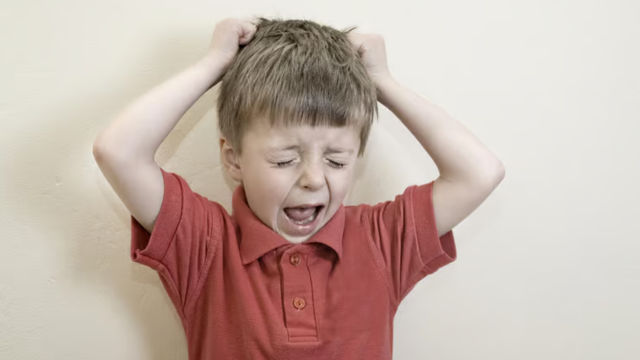
At a time when violence among children and teenagers seems to be becoming increasingly visible, an uncomfortable question arises: What happens when our child is not the one being hurt, but the one doing the hurting? Two professionals offer different perspectives.
Written by Maya Baron and Genia Kliot of ELEM/Youth in Distress in Israel
Ynet
September 14, 2026
We’re tired. We parents are really tired. Very tired.
In recent years, we’ve been through a period that is almost impossible to describe: COVID-19, war, military reserve duty, anxiety, loss, uncertainty, work, making ends meet, relationships and home life. And through it all, we’re trying to raise children and teenagers who have themselves experienced things no child should have to experience.
We’re allowed to be exhausted. We’re allowed to ask for help. In fact, we have to ask for it. But at a time when violence among children and teenagers seems to be becoming increasingly visible, an uncomfortable question arises: What happens when our child is not the one being hurt, but the one doing the hurting? And what is our responsibility as parents when our child crosses a line and harms another child?
On one thing, we agree: Parents cannot be removed from the equation. We disagree, however, about what that responsibility should actually mean.
Parental Authority Must Come With Responsibility
In recent years, it sometimes seems that we’ve come to expect someone else to raise our children; that the school will set the boundaries, the youth movement will keep an eye out, the teacher will notice, the police will handle it, social services will intervene, the therapist will fix it, and social media platforms will block dangerous content.
All of these systems have an enormous responsibility, but none of them can replace us.
We need to know where our children are. We need to take an interest in what’s happening on their phones. We need to know their friends. We need to ask questions even when they roll their eyes and set boundaries even when giving in would be much easier. Above all, we cannot look away when we discover that our child is not only someone who might be harmed, but perhaps also someone who is harming others.
I would not wish on any parent the moment when they have to look at the child they love most in the world and say: “What you did was serious. I will stand by you, help you and make sure you receive treatment if necessary, but I will not protect you from taking responsibility for what you did. I will expect you to stop, understand what you’ve done, make amends and face the consequences.”
Years of working with people who have been victims of crime have shown us just how easy it is, in the important discussion about rehabilitating the young person who caused the harm, to momentarily lose sight of the child who was hurt. But that child has a life to live afterward, too. They and their family may be left with prolonged emotional treatment, fear, shame, changing schools or other settings, lost workdays and financial expenses — and sometimes with consequences that follow them for years.
Parental responsibility does not mean we are to blame for everything our children do. It means we cannot be indifferent to what they do, blindly defend them, or expect someone else to bear the consequences in our place.
And therefore, the question is not only how we rehabilitate the young person who caused the harm. We must also ask: who is responsible for the damage that was left behind?
Other countries have already addressed this through the legal system. In the Netherlands, for example, when a child under 14 causes harm, civil liability falls on the person with parental responsibility. France has broad civil liability for parents for harm caused by their minor children. The underlying idea is not that every parent whose child causes harm is a bad parent, but that parental authority comes with responsibility as well.
We can debate whether Israel should adopt models like these, and in what circumstances. But it is harder to accept a situation in which a child intentionally causes serious harm to another child — and the entire cost of that harm is left with the child who was hurt and their family.
Parental responsibility does not mean we are to blame for everything our children do. It means we cannot be indifferent to what they do, blindly defend them, or expect someone else to bear the consequences in our place.
Parental Responsibility Is Not Measured in Receipts
After years of working with young people involved in the justice system, both in the juvenile probation service and in a secure residential program for teenage boys, the idea of imposing financial responsibility on parents raises concerns.
When the public is repeatedly exposed to serious incidents of youth violence, the desire for a clear and immediate response is understandable. “The child hurt someone? Make the parents pay.” It’s a simple equation, almost an intuitive one.
But the reality of young people who harm others is almost never that simple.
Behind serious boundary-crossing behavior, there is often distress, trauma, a sense of being unseen, difficulty regulating emotions, disconnection from established frameworks, and sometimes a family that is itself struggling to support the child. In such cases, a financial penalty does not address the root of the problem. It may instead add tension, anger and distress to a household that is already struggling to function.
A parent can pay thousands of dollars and take no responsibility at all. And a parent can take deep, painful responsibility without that responsibility being measured in a single dollar: acknowledging the seriousness of the act, not blaming the person who was hurt, setting a clear boundary for the child, requiring them to participate in treatment, getting parent support and guidance themselves, and taking action to prevent the harm from happening again.
Above all, money does not teach accountability.
A parent can pay thousands of dollars and take no responsibility at all. And a parent can take deep, painful responsibility without that responsibility being measured in a single dollar: acknowledging the seriousness of the act, not blaming the person who was hurt, setting a clear boundary for the child, requiring them to participate in treatment, getting parent support and guidance themselves, and taking action to prevent the harm from happening again.
If we want to prevent the next incident, parental responsibility needs to begin long before a court gets involved and continue long after the legal process ends.
Parents also need the tools to fulfill the responsibility we demand of them. Parent support and education, therapy, ongoing guidance, working with the family, and, when appropriate, restorative justice and processes aimed at making amends to the person who was harmed — all of these may require far more from a parent than simply opening their wallet.
The concern is that imposing financial responsibility could also give the government an easy solution: instead of investing in the family, supporting it and requiring a genuine process of change, send them a bill.
Real parental responsibility is not a fine. It is connection, presence, boundaries and the ability to see both our own child and the person our child has harmed.
On One Thing, We Agree
Perhaps our disagreement is not about whether parents need to take responsibility, but about what that responsibility should look like.
Should it also include financial responsibility for the harm caused by their child? Or does imposing a financial penalty miss the educational and rehabilitative goal? On that question, we disagree.
But we agree that the phrase “They’re just a child” cannot be the end of the conversation. We parents are tired, our children have been through difficult years, and the systems around us are struggling themselves. But none of that exempts us from our role.
We need to be there before the harm occurs — to ask questions, pay attention, set boundaries and take an interest. And we need to be there the day after, too, if our child has harmed someone: not to hide it, justify it, blame the person who was hurt or automatically stand as a protective wall between our child and the consequences of their actions.
We can debate money. We cannot debate responsibility.
Maya Baron is a professional director at ELEM / Youth in Distress in Israel, with years of experience working with people who have been victims of crime, trauma and people in vulnerable situations.
Genia Kliot is a professional director at ELEM’s Trauma Headquarters in Israel. She worked for years in the juvenile probation service and managed a secure residential program for teenage boys, with extensive professional experience working with young people who have committed offenses.