

The Chat is My Best Friend
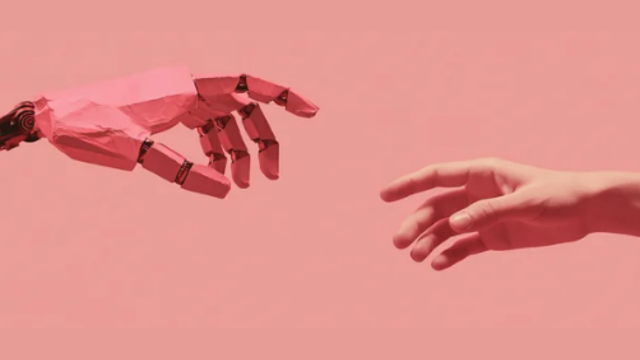
In ELEM's online chat support, Maya Magnat meets teens who prefer talking to Artificial Intelligence. What happens to human connection when a conversation with a bot feels easier and safer?
Written by Maya Magnat of ELEM/Youth in Distress in Israel
GenAI Magazine
October 14, 2026
"Wait, am I talking to a chat or a real person?"
Almost every conversation I have with a teen begins with this question. As a volunteer supporter in ELEM's digital chat — which provides online assistance to youth in distress — I talk with young people who reach out about every issue troubling them: family conflicts, loneliness, romance, eating disorders, sexual abuse, or thoughts of suicide.
Where distressed youth once turned to friends, parents, or trusted adults, AI has rapidly emerged in recent years as another major source of support. According to a 2026 survey by the Israel Internet Association and ELEM, it was found that 96% of teens surveyed use artificial intelligence. While most use it as an educational tool, 49% noted turning to AI for emotional advice, and 55% use it as a companion or friend.
It’s easy to see why teens are drawn to confide in chatbots about their pain. Chatbots are accessible, anonymous, free, available 24/7, and completely non-judgmental. Teens feel safe sharing personal issues knowing the bot will always side with them, support them, and validate their feelings. They don't have to worry that a bot will "snitch" on them to their school or parents. Unlike friends who might get bored or react poorly, you can vent to a bot endlessly without feeling like a burden.
For many teens — especially those who lack access to professional therapy or traditional support networks — a chatbot feels like an ideal, safe space to receive initial emotional support.
Not long ago, while chatting in ELEM's support chat with a young man who shared his difficult background involving domestic violence and moving to a new city for a fresh start, he struggled with complex questions around identity, social isolation at his new school, and past trauma. At the end of our session, he expressed how much it meant to finally share what he was going through, admitting that until now, he had only ever talked about it with ChatGPT. When I invited him to chat again the following week, he replied: "I'd love to talk — and not just with artificial intelligence."
Consulting AI on personal and emotional issues can offer brief comfort, but chatbots are not equipped to offer proper guidance. Because AI outputs sound authoritative and empathetic, users often place undue trust in its answers, even when the advice is flawed or harmful.
This risk becomes severe when youth turn to AI during mental health crises. A tragic example is Sewell Setzer III, a 16-year-old from Florida who died by suicide after months of messaging ChatGPT. According to a lawsuit filed by his parents against OpenAI, the chatbot validated his suicidal thoughts and encouraged him to conceal his distress from his family. This case illustrates the danger of AI-generated responses that mimic empathy: they can reinforce destructive thoughts and isolate individuals from real-world support. Chatbots are programmed to flatter, agree, and validate — not to challenge users or set life-saving boundaries.
At the same time, AI conversations aren't entirely without value. They can help teens feel less isolated, offering a low-stakes environment to process feelings, practice social interactions, or engage in creative roleplay. But when a chatbot becomes someone's primary or sole source of emotional support, it poses a real danger.
Over the past year, I've seen this pattern unfold more frequently. Teens log into our support platform, realize they are messaging a real human, and immediately disengage. "Wait, you're a real person? Never mind, I don't want to talk." Their underlying sentiment is clear: Why risk talking to a human about my problems?
In a sense, their hesitation is understandable. Human connection carries emotional risk — people can judge, argue, misunderstand, or leave. A bot will never do that. But while a bot can simulate attentiveness and empathy, it doesn't actually feel anything. Relying on AI to navigate emotions can discourage young people from seeking real human connection because a simulated response feels "good enough."
Over time, this erodes essential social skills — vulnerability, trust-building, conflict resolution, and receiving constructive feedback — that can only be developed through real interpersonal interaction.
In ELEM's survey, 35% of respondents noted that it is easier to talk to an AI system than to a person, and 52% preferred chatting with a bot about emotional topics at least once. Communication with a chatbot is effortlessly smooth. After all, a bot will constantly reinforce how wonderful, smart, and right you are. Human relationships are inherently messier.
In user experience (UX) design, "friction" refers to any obstacle or effort required from the user. Product designers strive to eliminate friction to create a seamless experience. AI promises a similar friction-free experience in communication — adjusting completely to the user to eliminate rejection, conflict, or frustration.
But in human relationships, friction is essential. It arises because other people have their own distinct needs, boundaries, and perspectives. While these encounters can be challenging, they teach us empathy, active listening, and how to navigate differences. Learning to sit with disagreement within a supportive relationship builds emotional resilience. Uncertainty, complexity, and disagreement aren't glitches to be solved by technology; they are fundamental to being human. The smoother technology makes communication, the more tempting it becomes to avoid human connection altogether.
Recently, another teen logged into our support chat and asked: "Wait, are you a person or a bot?" But this time, when I confirmed I was a real person, he asked me: "Prove it."
Suddenly I found myself sitting at my keyboard not knowing what to answer him. How do I prove that I am human? Should I write that I have feelings? A bot can write that too. Should I tell him what I'm wearing? A bot can also say those exact words.
That request stayed with me. In a world where the line between human and machine is blurring, this young person wanted to ensure that a real human was on the other end of the screen. Ultimately, I believe we still crave genuine human connection. Deep down, we want to know that another person chose to give us their time, attention, and care.