

“No More Red Lines. Anything Goes.” - The Teens Growing Up Amid Violence
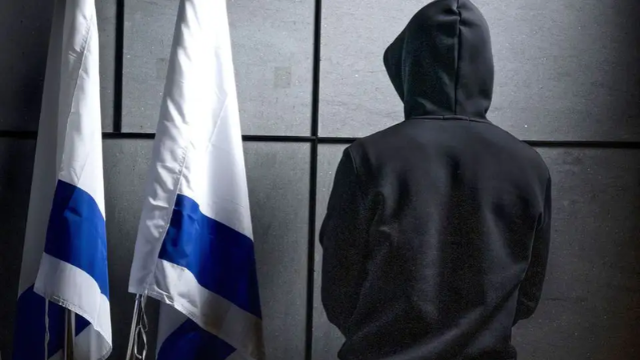
A street argument can quickly escalate into a dangerous fight, as the desire to earn respect increasingly outweighs the fear of consequences. ELEM's data show that 54% of teenagers are exposed to violence, while reports of online violence surged 135% in a single year. Teenagers who have firsthand experience with violence describe the fear of being seen as weak, the erosion of boundaries and the lesson life has taught them: “Want people to listen to you? Go to extremes.”
Written by Or Nazri
Israel Hayom
November 16, 2026
Lior (18, a pseudonym) has been smoking marijuana since he was 15. “A lot. Every day, all day,” he says. “Even when I had no money, I always found a way to get something to smoke.” He grew up in what he describes as a stable, conventional family. His parents both work and earn a decent living, “but they're not very present or attentive,” he is quick to add.
It was another ordinary day wandering around the neighborhood, a cigarette lit in his hand, when a female municipal inspector called out to him from across the street. “I don't even remember what she shouted at me,” he says. “But I felt my whole body fill with anger in an instant. I approached her threateningly, cursing and shouting.”
Within moments, the encounter escalated into a violent assault. According to the indictment filed against him, Lior punched the inspector repeatedly, breaking her glasses. “I don't remember exactly what happened in those moments because I was so angry and stressed,” he admits. “But I immediately flagged down a taxi and fled the scene.” His attempt to escape was unsuccessful, however. Police tracked him down and arrested him. “I realized this time it was serious. There are consequences to my actions.”
This kind of outburst was nothing new for Lior. For years, he struggled to find his place among his peers. “I dealt with anxiety, withdrew into myself and isolated myself for most of my school years.” Beneath the quiet exterior he had cultivated was anger and tension he didn't know how to manage. “When something bothered me, I felt the need to explode, to yell it out,” he explains. “I learned that this is how you solve problems. You want people to listen to you? Act outrageously.”
Lior's story reflects a much broader phenomenon. Data from ELEM's 2025 report point to a significant increase in teenagers' exposure to violence: 54% had been exposed to at least one form of violence, and 40% of those had experienced three to four different forms. The percentage of teenagers who had experienced or been involved in violence outside the home reached 53%, up from 31% in 2024. Violence within the home also increased, from 20% to 38%, while reports of online violence surged from 17% to 40% in a single year, a 135% increase.
But the data reveal more than violence alone. They also point to the emotional struggles that often accompany it: among teenagers who reported experiencing violence at home, 78% also struggle with depression and anxiety. Among those who reported experiencing online violence, 74% struggle with loneliness. More than one-third of the teenagers surveyed experience social difficulties severe enough to involve social exclusion or ostracism.
“I Have to Act Tough So People Won't Mess With Me.”
Mohammed (a pseudonym), a young Arab man from northern Israel, is also all too familiar with the fear, anger and pressure to act aggressively just to be noticed. But unlike Lior, who describes outbursts in which he lost control, Mohammed describes a reality in which projecting strength and resorting to violence have become almost prerequisites for simply walking down the street.
“Things are terrible. Everyone wants to establish themselves as an abu ali,” he says, using a colloquial expression for someone who acts like a tough guy or big shot. “Everyone wants to show they're the boss, and that desire can turn even the most trivial disagreement into violence,” he explains. “Someone says the wrong thing, and within seconds, it's turned into a fight.”
Mohammed grew up in a home where respect for every person was a firmly held value. “My parents are polite people who expected my siblings and me to behave accordingly.” But outside the home, he says, “the rules are completely different. I learned that being polite doesn't get you anywhere,” he says firmly. “If I don't want people messing with me, I have to show strength. Even when I don't want to, and even though I regret it every time I'm involved in a fight,” he says. “In the end, it's either you're the one being attacked or you're the one attacking.”
According to Mohammed, establishing a reputation and social status has become a central part of social interactions. “It's not just that teenagers don't care about getting into trouble. More than that, they're actively looking for it. The consequences don't even cross their minds,” he says, adding with a touch of humor, “It impresses girls, but it's also a way to earn the respect everyone wants.”
“And what happens to someone who doesn't want to get into trouble or play along?” I ask.
“Then you're seen as naive, soft and weak, and people will come after you. You don't want to be weak.”
In the reality Mohammed describes, even those who choose to avoid confrontations aren't necessarily safe. He says the boundaries in today's world are becoming increasingly blurred, along with the risks. “It's well known that Arab culture has certain red lines you don't cross,” he says. “But today, there are no more red lines. Anything goes. A seemingly meaningless argument can put you in an extremely dangerous situation, where you could even be killed.”
“Barren Ground for Raising Children.”
“I can't remember years this difficult, both in terms of the intensity and the level of violent rhetoric among teenagers,” says Maya Fish-Baron, ELEM's professional director. “The country has created all the conditions for violence to reach extreme levels.” She explains that this escalation isn't happening in a vacuum, but largely reflects the reality in which teenagers have been growing up in recent years. “Three years of war, preceded by the COVID-19 pandemic, haven't brought us to a good place. The public discourse is extremely hostile, and this is an unhealthy environment in which to raise children. It has an impact, and it trickles down.”
According to Fish-Baron, teenagers are growing up in an environment where the boundaries of acceptable discourse are increasingly blurred, and the growing use of social media is only intensifying the problem. “Interacting from behind a screen is an experience that dulls our emotions,” she says. “In that situation, young people's ability to feel empathy for others erodes.” But social media, she explains, isn't simply another platform for expressing violence.
“Social media platforms actively prioritize violent content. So when we see young people online behaving violently toward bus drivers, or bullying a girl, beating her up and getting countless views, popularity becomes a goal in itself,” she says with concern. “These teenagers are the future of our society, but they're also its present. Tomorrow, they'll be serving in the military, making decisions about this country and holding positions of influence.”
For Lior, his arrest became a turning point. With support from his probation officer and ELEM, he is learning to manage his anger and stress in healthier ways, and to examine his feelings and reactions before acting on them.
Mohammed, too, is taking a more critical look at the violence that has become part of everyday life and recognizing its consequences. “Teenagers think life is a game. Weapons and knives are just toys,” he says. “But when you get into trouble, you realize there's no turning back. We've brought this on ourselves.”