

83% of Young People Report Emotional Distress: A Major Challenge for Israel’s Next Education Minister.
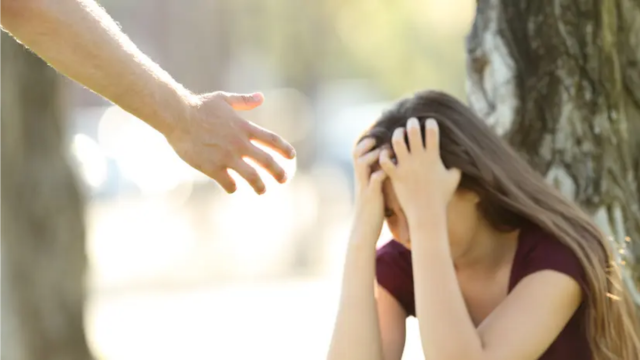
The data on the mental health of young people in Israel paint an especially troubling picture. With violence, anxiety, and school disengagement on the rise, Israel’s next education minister will face a crisis that reaches well beyond the classroom.
Written by Yuval Bagno
Maariv
November 12, 2026
Whoever among the elected officials ultimately takes office as Israel’s next education minister will face an unbearable public health and mental health crisis that cannot be ignored: young people in Israel are experiencing unprecedented levels of distress.
That is the warning from Dr. Sarit Shimoni-Kent, a senior lecturer and researcher in the Department of Nursing at the Faculty of Health Professions at Ono Academic College.
In an article published in Maariv, she emphasizes: “We can save them, but only if we recognize that schools and social welfare services can no longer operate separately. Education and social welfare must work together as one integrated system.”
The ongoing war and seemingly endless state of emergency have brought young people in Israel to a breaking point, with a crisis affecting multiple aspects of their mental health. A report by the Israel National Council for the Child points to a sharp increase in the percentage of girls (69%) and boys (78%) experiencing stress, depression, and anxiety, alongside a significant rise in substance use and increased school dropout rates.
These figures align closely with findings from a report by ELEM, published this year in partnership with and with funding from Israel’s Ministry of Welfare. The report paints a picture of an educational crisis that has become a severe social welfare concern: 54% of young people had been exposed to violence outside the home, 51% reported being victims of sexual violence, 66% use alcohol, and 45% use drugs. It also found an alarming 70% increase in reports of self-harm since the beginning of 2026.
When we see rising rates of violence and substance use, alongside increased school dropout rates, one thing becomes clear: the educational crisis and the social welfare crisis are, in fact, one and the same.
A comprehensive parent survey conducted by the Manor Center in July 2026 found that 88% of parents reported that their children had experienced academic difficulties, 83% reported psychological or emotional harm, and 74% reported social difficulties.
The report also found a direct and alarming correlation: students who experienced frequent class cancellations reported significantly higher rates of psychological and social harm (50% and 56%, respectively) than students who did not experience repeated cancellations.
All of this is happening at a time when just 22% of parents are satisfied with the education system's performance during the war. The disconnect between the Ministry of Education and social welfare services is leaving children caught in the middle without adequate protection for their mental health.
A Proven Solution: Integrating Education and Social Welfare Through Informal Education
The traditional classroom and standardized exams, with all their limitations, are simply unable to provide the therapeutic support and sense of safety that children need today. When students are experiencing mental health difficulties, meaningful support won't come from memorizing material for their matriculation exams, but from the very space where education and social welfare intersect: informal education.
Informal educational settings (including youth centers, youth movements, after-school clubs, and volunteer initiatives) serve as the channel through which educational and emotional support from social welfare services reaches young people in their communities.
The data bear this out: A June 2026 survey by the National Student and Youth Council, conducted with the guidance of Dr. Einav Amram-Ashrov, found that 70.5% of young people involved in informal educational programs reported feeling energetic and full of vitality, compared with just 46.7% of those who were not involved in such programs.
The public recognizes this as well. A June 2026 survey conducted for the Federation of Local Authorities in Israel by Dr. Miri Goldrat and Dr. Yaron Sela found that parents and young people do not view informal education as simply an extracurricular activity. Rather, they expect it to become a safe space offering emotional support, social welfare services, and opportunities to develop resilience skills. And this is precisely where a glaring health and social injustice lies.
Today, this critical connection between education and social welfare depends largely on the financial resources of local authorities and the economic circumstances of parents. A student in a well-resourced community has access to a youth center, a youth outreach worker, and a mentor who can help keep them engaged and away from risky situations. Meanwhile, a student in an under-resourced community is left alone to navigate life behind screens, alcohol use, and declining mental health.
Israel’s incoming education minister can continue promising reforms to the matriculation exams and debating classroom instruction hours, but that would mean treating the symptoms rather than the underlying problem. The most urgent priority on the first day in office must be bringing the Ministry of Education and the Ministry of Welfare together and establishing a comprehensive, dedicated budget for informal education for every child in Israel.
Informal education is the remedy, the therapeutic support system, and the safety net for Israel’s children in times of both routine and crisis. It is time to recognize it as an essential, life-saving component of every national budget.