

"Some of Today's Youth No Longer Feel Anything"
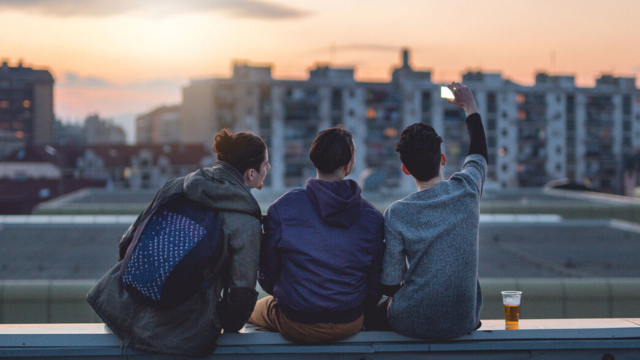
Passover is here again, but for many teens, this holiday of "freedom" feels like a distant reality. What often looks like detachment, acting out, or risk-taking is actually a survival mechanism — a way of coping with deep-seated emotional weight and trauma. By creating a safe space for real conversations, we can shift the narrative toward a new direction: one of healing and hope.
Written by Maya Fish Baron
Mako
April 5, 2026
Passover is here once again. It feels as though it was just a moment ago—or perhaps in another lifetime—that we were sitting through Zoom Seders in isolation. Since then, we've entered an endless stretch of darkness. Now, spring has returned and the flowers are in bloom, bringing with them the seasonal wishes for "freedom." But for so many, that freedom feels like a fading memory of a world that no longer exists.
The Haggadah tells us of four sons. As I recall, one was wise, another was wicked...but I’ve since lost track. These days, one has fallen asleep and can't bear to wake up for the Zoom call, another has her camera turned off because she’s ashamed for anyone to see the state of her home, and the third is permanently on mute because the screaming in the background has become unbearable.
The Haggadah describes four distinct sons, and perhaps in a similar way, life today presents us with four expressions of mental health struggle among teens living through continuous trauma. These four patterns aren’t separate categories; they are shifting emotional states. The same teenager can be "both/and"—moving between these roles at any time. Our challenge is to look beyond the outward behavior and understand what truly lies beneath it.
Detached - The One Who Can No Longer Feel
Dana arrived at an emergency shelter after years of living on the streets. The same street that was once bustling has become eerily quiet. It is the silence, rather than the noise, that has broken her. When asked about the war, she doesn't answer—not because she doesn't care, but because her body simply has no room left for more battles. She is preoccupied only with what is right in front of her: a meal, a shower, a cigarette, making it through the night. For many young people, trauma didn’t begin with the war; it predated it. Violence, neglect, or sexual abuse meant they were already living in the shadow of constant distress. In these cases, dissociation and emotional detachment are primary survival mechanisms. Complex childhood trauma is often linked to difficulties in emotional regulation, a fragmented sense of self, and a tendency to disconnect.
Overwhelmed - The One Who Can’t Look Away
Noam says the TV at home is always on. To cope, he puts on headphones and disappears into a screen, watching everything without a filter. Sometimes, the content is mindless. Other times, it’s brutally violent. It all depends on the morning's algorithm. There was a time when this would have affected him, but today, with the addition of alcohol in the evenings, he no longer feels a thing. In homes saturated with news, parental anxiety, and financial or physical insecurity, an emotional backlog builds up. In these moments, screen time acts as a form of avoidance or suppression, providing a temporary, hollow sense of self-regulation. However, during a crisis, increased media exposure is directly linked to rising anxiety, depression, and a sense of helplessness among teenagers.
Hyper-vigilant - The One Who Can’t Calm Down
During a Zoom call with field teams, staff shared that they are seeing more and more teenagers engaging in high-risk behaviors: a rise in looting during sirens, vandalism, weapon possession, and aimless wandering. Some call this "thrill-seeking," while others describe it as "acquired helplessness." These young people expressed that adults promised them they would be safe, but once that promise was broken, they took matters into their own hands. Trauma leaves the nervous system in a state of chronic hyper-vigilance. Recent studies confirm the link between adolescent trauma and a surge in impulsivity and "sensation seeking." When internal regulation fails, behavior becomes an external tool for control. What looks like a desire to take risks is actually their only way to feel alive.
Overachiever – The One Who Can’t Stop
Noa is the girl who volunteers for everything—paramedic services, food distribution, blood drives, sending meals to soldiers—all while working full shifts at the mall. She rarely sees her friends, and occasionally at night, just to fall asleep, she feels the need to cause herself physical pain. Sometimes, this even escalates to self-harm. Noa is the type of girl everyone praises. She is working, functioning, studying, responsible, and keeping her household together. But what happens when intense activity becomes a way to avoid feeling pain? As long as there is movement, there is no stopping to face it. Sándor Ferenczi (1933) described this as a "defensive split," a state where one part of the soul continues to function while another part does not. The traumatized child Ferenczi described is forced into a premature adulthood to survive, but this "growth" is distorted. At a recent conference on Post-Traumatic Growth, Uri Noach noted that we must distinguish between true growth and "crooked growth" that relies on denial. A life force that isn’t allowed to grow properly can become a false front when we don't prepare for the reality of the trauma.
In conclusion, there are, of course, more than just these four patterns of struggle among young people, and I haven't expanded on all of them here. However, these are the behaviors that are most common, and they are present right here in our own homes. If we return to the Haggadah, we must learn to look at these behaviors with a clear, sober eye. We must speak about them and with them at the Seder table, rather than hiding them or trying to cover them up. The more space we make for this, the more we will realize we are not alone. More and more families are grappling with these same realities. This is a conversation that doesn't seek to force a return to "normal," but rather creates a space to look toward the day when we can finally speak of hope.
Maya Fish Baron is a social worker and Director of the Trauma Field at ELEM in Israel.